



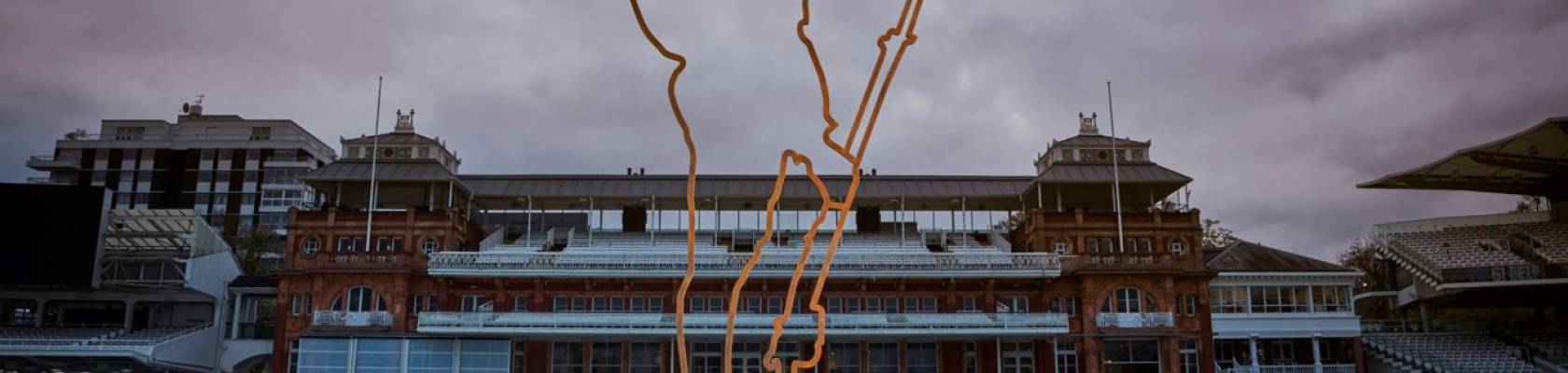
As we approach Remembrance Sunday and Armistice Day, we have and put together a list of Middlesex first-class cricketers who lost their lives in the World Wars.
They shall grow not old, as we that are left grow old;
Age shall not weary them, nor the years condemn.
At the going down of the sun and in the morning
We will remember them.
Lord Bernard Gordon-Lennox (Middlesex 1903) Played one match for Middlesex, at Lord's in 1903, where he was bowled for nought by Gloucestershire's Gilbert Jessop. A Major in the Grenadier Guards, he was killed at Kleinzillebeke, near Ypres, on 10 November 1914, aged 36, the first of the county's cricketers to fall.
Wilfred Bird (Middlesex 1905-08) A wicketkeeper who captained Oxford and kept in eleven matches for Middlesex between 1905 and 1908. A Lieutenant in the King's Royal Rifle Corps, he was killed at Richebourg St Vaast on 9 May 1915, during the Battle of Aubers Ridge, aged 31. He has no known grave.
Guy Napier (Middlesex 1904-13) A fine medium-pace bowler who took 365 first-class wickets, 21 of his matches for Middlesex, including six for 39 for the Gentlemen against the Players at Lord's in 1907. A Captain in the 35th Sikh Regiment, he was killed at Loos on 25 September 1915, the opening day of the battle, aged 31.
John McCulloch (Middlesex 1914) Played twice for Middlesex in 1914, in the last weeks before the war ended county cricket. A Captain in the Border Regiment, he died at Bailleul, France, on 21 October 1915, aged just 20, the youngest of the county's fallen.
Sholto Douglas (Middlesex 1906) Played one match for Middlesex in 1906, scoring 30 runs. A Boer War veteran, he served as a Captain in the Middlesex Regiment, the county's own, and was killed at Cambrin, near Arras, on 28 January 1916, aged 42.
Harry Chinnery (Middlesex 1899-1902) A Teddington-born batsman who scored over 2,500 first-class runs for Middlesex and Surrey, with nine matches for the county. A Lieutenant in the King's Royal Rifles, he was killed at Monchy-le-Preux on 28 May 1916, aged 40.
Cecil Gold (Middlesex 1907) Played one match for Middlesex in 1907. A Lieutenant in the Royal Berkshire Regiment, mentioned in dispatches, he fell at Ovillers on 3 July 1916, in the opening days of the Battle of the Somme, aged 29.
Sir Foster Cunliffe (Middlesex 1890s). An Oxford captain and MCC committee member who made occasional Middlesex appearances in the 1890s, and a military historian by profession. A Major in the Rifle Brigade, he died at Ovillers-la-Boisselle on the Somme on 10 July 1916, aged 40.
William Benton (Middlesex 1913) Played twice for Middlesex in 1913, making an unbeaten 19 against Hampshire that outscored every opposition batsman. A Captain in the Manchester Regiment, he was fatally wounded on the Somme on 17 August 1916, aged 43, while going into No Man's Land to rescue wounded men.
John Hunt (Middlesex 1902-12) The longest-serving Middlesex man among the Great War fallen: 44 matches and 1,393 runs across eleven seasons, plus a century for the Gentlemen against the Players in 1904. A 2nd Lieutenant in the London Regiment, he was killed at Ginchy on 16 September 1916, aged 41.
Leonard Moon (Middlesex 1899-1909) An England Test cricketer who played four Tests in South Africa in 1905-06 and shared two double-century opening stands for Middlesex with Plum Warner. A 2nd Lieutenant in the Devon Regiment, he died at Karasouli, Salonica, on 23 November 1916, aged 38.
Maurice Coxhead (Middlesex 1911) A seam bowler who played for Middlesex in 1911, taking 13 first-class wickets with a best of five for 53. A Major in the Royal Fusiliers, he was killed at Monchy on 3 May 1917, during the Arras offensive, aged 27.
Richard Lewis (Middlesex 1898) A wicketkeeper with three Oxford blues who played twice for Middlesex in 1898, and a career soldier who rose to command a battalion. Lieutenant-Colonel Lewis, of the Manchester Regiment, was killed at Ypres on 7 September 1917, aged 43, the highest-ranking of the county's fallen.
Allan Ivo Steel (Middlesex 1912) Son of the England all-rounder A.G. Steel, he played twice for Middlesex in 1912. A Lieutenant in the Coldstream Guards, he was killed at Langemark, Belgium, on 8 October 1917, aged 25.
Clifford Saville (Middlesex 1914) Tottenham-born, he played three matches for Middlesex in the final summer before the war. A Captain in the East Yorkshire Regiment, he died at Fresnoy-le-Grand, France, on 8 November 1917, aged 25.
Leonard Colbeck (Middlesex 1906-08) Famous for a match-turning 107 for Cambridge in the 1905 Varsity match, he played ten matches for Middlesex. A 2nd Lieutenant in the Royal Field Artillery, awarded the Military Cross, he was lost at sea aboard HMS Ormonde off the Cape of Good Hope on 3 January 1918, aged 34.
Reggie Schwarz (Middlesex 1901-05) Learned the googly from its inventor, his Middlesex team-mate Bernard Bosanquet, and took it home to South Africa, where he became a Test match pioneer with 55 wickets in 20 Tests. He also played rugby for England. A Major in the King's Royal Rifle Corps, awarded the Military Cross, he survived the war only to die of influenza at Etaples on 18 November 1918, a week after the Armistice, aged 43.
Reginald Butterworth (Middlesex 1935-39) A Harrow and Oxford all-rounder who became a regular Middlesex batsman in the late 1930s, opening the batting with Bill Edrich in 1937. A Pilot Officer air gunner in the RAF, he was shot down near Saint-Omer on 21 May 1940, during the Battle of France, aged 33. He is buried at Saint-Martin-au-Laert.
Robert Nelson (Middlesex 1931) Made a handful of Middlesex appearances from 1931 before captaining Northamptonshire, where in 1939 he famously ended their four-year wait for a Championship win. A 2nd Lieutenant in the Royal Marines, he was killed on 29 October 1940 when Italian bombers struck the barracks at Deal, Kent, aged 28.
John Butterworth (Middlesex 1925) The elder brother of Reginald, he played for Middlesex in 1925 before going up to Oxford. An anti-aircraft officer in the Royal Artillery, he was killed on 18 March 1941 when a bomb exploded beside his battery at Shooter's Hill, London, aged 35, ten months after his brother.
Freeman Barnardo (Middlesex 1939) Played one match for Middlesex, and one for Cambridge, in 1939, making a polished 75. A Lieutenant in the Queen's Bays, an armoured regiment, he was killed west of El Alamein on 25 October 1942, in the battle that turned the war, aged 24. He is buried in El Alamein War Cemetery.
Joseph Connaughton (Middlesex 1939) A Paddington-born leg-break bowler who played for Middlesex and Oxford University in 1939. A Royal Artillery officer, he was lost at sea on 12 February 1944 when the troopship Khedive Ismail was torpedoed by a Japanese submarine near the Maldives, with the loss of around 1,300 lives. He was 25.
Jack Lee (Middlesex 1923) Brother of the Middlesex stalwart Harry Lee, he played once for the county in 1923 before becoming a fine Somerset all-rounder, with six centuries and a best of 193 not out. A Private in the Pioneer Corps, he was killed in Normandy on 20 June 1944, a fortnight after D-Day, aged 42. He is buried at Ryes War Cemetery, Bazenville.
David Hayward (Middlesex 1939) An Australian-born leg-break bowler who took 19 wickets for Oxford in 1939 and made one appearance for Middlesex the same summer. A ferry pilot with the Air Transport Auxiliary, he was killed on 21 April 1945 when his aircraft crashed after take-off from RAF Lasham, Hampshire, aged 24, weeks before VE Day.
Paul Brooks (Middlesex 1939) The MCC ground staff boy who, aged 16, bowled Don Bradman in the Lord's nets in 1938, he made an unbeaten 44 on debut in Middlesex's final match before the war. A fireman through the Blitz and then a Coldstream Guardsman, he was shot by a sniper in Italy in April 1945 and died of his wounds at St Mary's Hospital, Paddington, on 26 January 1946, aged 24, the last Middlesex cricketer to die of the war.